
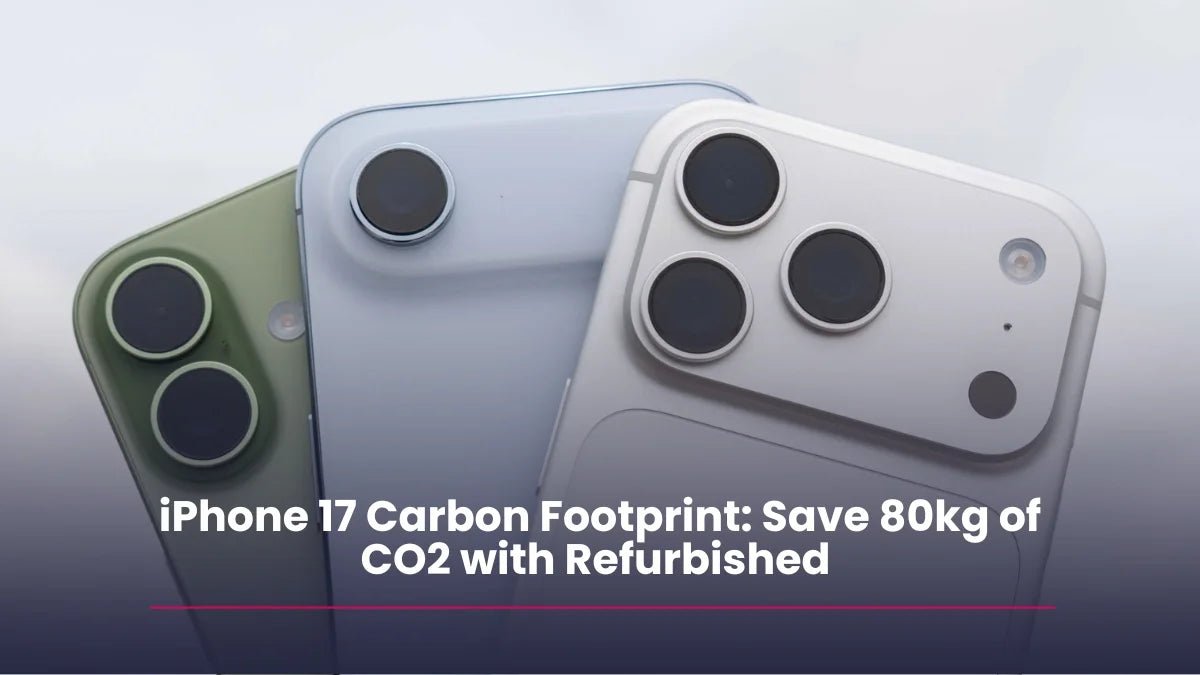
In 2026, the launch of the iPhone 17 has set new benchmarks for performance, featuring the A19 chip and ultra-efficient display technology. However, for the environmentally conscious consumer, there is a statistic that doesn't appear on the shiny marketing slides: the carbon cost of bringing that device to your doorstep.
While Apple has made significant strides toward its "Apple 2030" carbon-neutral goal—using 100% recycled cobalt in batteries and moving toward fibre-based packaging—the reality remains that manufacturing a new smartphone is a carbon-intensive process. If you are looking to upgrade your tech in 2026, the single most impactful decision you can make for the planet isn't choosing a specific brand; it’s choosing a refurbished device over a new one. Here is the deep dive into why buying refurbished saves an average of 80kg of CO2 per device.
1. Where Does the Carbon Come From?
To understand the savings, we first have to look at the "hidden" lifecycle of a new iPhone 17. Apple’s own environmental data consistently shows that the vast majority of a device's carbon footprint occurs before you even turn it on.
The Lifecycle Breakdown:
-
Production (approx. 80%): This includes mining raw materials (lithium, gold, copper, and rare earth elements), refining them, and the high-heat manufacturing processes in semiconductor fabs.
-
Transport (approx. 3-5%): Shipping millions of units from assembly hubs in Asia to the UK via air and sea.
-
Usage (approx. 15%): The electricity consumed by the user over the expected 3-4 year lifespan of the device.
-
End-of-Life (approx. 1%): The energy required to recycle or dispose of the unit.
By buying a refurbished iPhone, you effectively cancel out the "Production" and "Transport" phases of a new device's footprint. You are extending the life of an existing asset rather than demanding the creation of a new one.
2. The "80kg Saving" Explained
Why 80kg? Across the industry, the carbon footprint for a premium flagship smartphone ranges between 70kg and 95kg of CO2e (carbon dioxide equivalent).
-
The New iPhone 17: Despite increased use of recycled aluminium and clean energy in the supply chain, the complexity of 3nm chips and advanced camera optics keeps the manufacturing cost high.
-
The Refurbished Alternative: The carbon cost of refurbishing a device—including testing, cleaning, and perhaps a battery replacement—is estimated at just 5kg to 10kg.
The Math: 85kg (New) - 5kg (Refurbished) = 80kg of CO2 saved. To put that into perspective, 80kg of CO2 is roughly equivalent to driving 200 miles in a standard petrol car or the amount of carbon a mature tree sequesters over four years.
3. Beyond Carbon: The E-Waste Crisis
While CO2 is the headline figure, the "hidden" cost of new tech includes electronic waste (e-waste). In 2026, e-waste remains the fastest-growing waste stream in the UK.
When you buy a refurbished iPhone 15 or 16 instead of a brand-new 17, you are preventing a perfectly functional high-end machine from being discarded. Every refurbished sale at RueZone represents one less device potentially ending up in a landfill, where toxic heavy metals like lead and mercury can leak into the soil.
4. Is a "Recycled" New Phone Just as Good?
Apple’s 2026 Environmental Progress Report highlights that 30% of their material now comes from recycled sources. This is excellent progress, but it doesn't tell the whole story.
Even "recycled" materials require energy-intensive processing to be reused in high-precision electronics. "Reuse" is always more efficient than "Recycle." Reusing an entire device via refurbishment preserves the "embedded energy" already spent on the original manufacturing.
5. Performance vs. Planet: Do You Have to Compromise?
In 2026, the performance gap between generations has narrowed. A refurbished iPhone 15 Pro or iPhone 16 still offers:
- All-day battery life (with RueZone’s rigorous battery health testing).
- High-speed 5G connectivity.
- Years of iOS updates (typically 6-7 years from release).
By choosing a model that is 12-24 months old, you get 95% of the features of the iPhone 17 while taking 100% of the credit for a massive carbon saving.
Frequently Asked Questions
Does Apple’s "Carbon Neutral" claim mean new phones are fine?
Apple’s corporate operations and some specific products (like certain Apple Watches) are carbon neutral through a mix of clean energy and carbon offsets. However, most iPhones still have a significant "gross" carbon footprint. Refurbished is the only way to avoid that footprint entirely.
What about the carbon cost of a replacement battery?
A new battery has a very small carbon footprint compared to the rest of the phone (roughly 2-5kg). Replacing a battery to give a phone three more years of life is one of the most carbon-efficient "repairs" possible.
Is buying refurbished better than recycling my old phone?
Yes. Recycling is the last resort. Passing your phone into the refurbished market so someone else can use it as their primary device is much better for the environment than breaking it down for parts.
Conclusion: The Smartest Upgrade of 2026
The "Carbon Cost" of our digital lives is becoming harder to ignore. As the iPhone 17 hits the shelves, we have to ask if the incremental camera upgrade is worth the 80kg of carbon it costs to produce.
Buying refurbished isn't just about saving money anymore—it’s about decoupling our love for tech from its environmental impact. When you choose a RueZone certified refurbished device, you’re getting a "Pristine" experience for your pocket and a lighter conscience for the planet.